
The new investment account opens on 1 July 2027. Here is what we know, what we are still waiting for, and why your pension still comes first.
Resources
Practical advice on pensions and financial planning in Ireland
Clear writing on pensions, retirement, and the decisions that shape your financial future. From our team to you.

Start here
Guides by topic
Pensions
Old pensions, PRSAs and the gender pension gap.
- PRSA vs company pension in Ireland
- Should you consolidate your pensions?
- The pension detective
- The gender pension gap
Advice and costs
How advisers are paid, what we charge, and when advice is worth it.
Financial planning →Articles
Insights and client stories
What Budget 2027 means for your pay, pension and savings
Budget 2027 puts a little more in your pay from January, leaves pension tax relief alone and adds a new investment account from July 2027. Emma Farrelly sets out what it means for your plans and three things to do before January.
How much does a financial advisor cost in Ireland?
Financial advisers in Ireland are paid by fee, by commission or by a percentage of assets. Here is what each one means for you, what to ask, and what we charge.
Income protection in Ireland: what it costs, what it covers and the tax relief
Income protection replaces up to 75% of your income if illness or injury stops you working. Premiums get tax relief at your marginal rate. Here is how it works and what drives the cost.
Is €500,000 enough to retire on in Ireland?
A €500,000 pension pot plus the State Pension gives a single homeowner about €30,500 to €35,500 a year, depending on the tax-free lump sum. Worked examples inside.
Is a financial adviser worth it? An honest answer from one
A financial adviser is most clearly worth the cost when you have several pensions, are near retirement, run a business or have dependants. Here is when advice helps, when it does not, and the downsides.
Is life insurance worth it in Ireland? Cost, types and how much cover you need
Life insurance is worth it if someone depends on your income or would inherit a debt. Here are the four types sold in Ireland, what they cost, and how to work out the right amount.
PRSA vs company pension in Ireland: which is better in 2026?
A PRSA is yours and moves with you. A company pension is run by your employer. Here is how they differ on contributions, tax, charges and access, and whether you can have both.
How to make your retirement money last in Ireland
Retirement planning is about income, not just the size of the pot. Why planning to age 90 matters, and what a proper income plan covers.
From crisis to financial stability: a client story
A company director needed cash for his mortgage, and his savings sat in old pensions. A planned withdrawal gave him room without wrecking retirement.
The pension detective: finding pensions from old jobs
Pensions from jobs in Ireland and abroad, and no clear picture of them. How one review found the fees, the funds and the retirement income.
Should you consolidate your pensions in Ireland?
Rolling old pensions into one pot can lock them to a single retirement age. Here is when to keep them separate, and what a retirement bond does instead.
The gender pension gap in Ireland: what it is and what you can do about it
Women in Ireland retire on pensions around a third smaller than men's. Emma Farrelly explains why the gap exists, why auto-enrolment will not close it, and five things you can do now.
Events & talks
Seminars and information sessions
Future Financial Planning holds occasional seminars and information sessions for employers and individuals. When we have an upcoming event, we will share details here. In the meantime, you can read about our most recent session below.
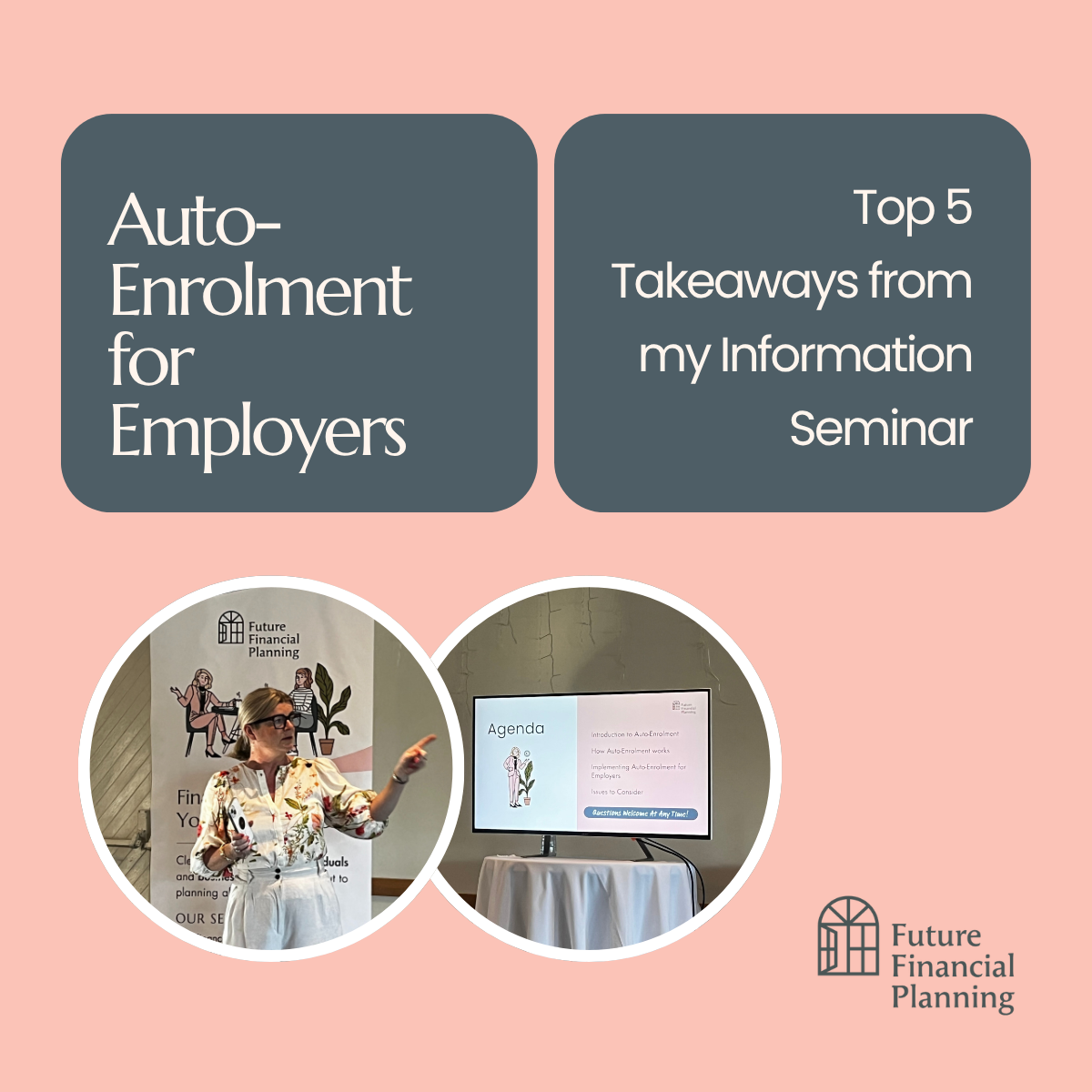
MyFutureFund auto-enrolment seminar
Future Financial Planning hosted an information seminar on MyFutureFund, Ireland’s auto-enrolment pension scheme, which began on 1 January 2026.
The session helped employers understand what auto-enrolment means, who it applies to and what practical steps they may need to consider.
- What auto-enrolment means for Irish employers
- Which employees may fall within the scheme
- Employer responsibilities
- How auto-enrolment fits with existing workplace pension arrangements
- Communication with employees
- Practical planning steps for business owners and HR teams
Five things every Irish employer needs to know
Key takeaways from our auto-enrolment session for employers.
Employers must engage
Employees aged 23–60 earning over €20,000 who are not in an occupational pension scheme will be auto-enrolled, including part-time and seasonal staff.
You must contribute too
Employer contributions start at 1.5% of gross earnings, rising to 6% over ten years. Contributions are tax-deductible and paid via payroll to NAERSA.
Payroll systems need updating
Your payroll must process Auto-Enrolment Participant Notifications and deduct the correct contributions. Early preparation is essential.
AE is not a replacement for quality advice
Auto-enrolment is fixed and does not allow AVCs or flexible access. Traditional workplace pensions may suit higher-rate taxpayers better.
Staff communication is critical
Employers must inform staff about AE membership, opt-out windows, and how the scheme interacts with existing pension arrangements.
Press
In the media
Pensions, auto-enrolment and the bigger picture
Emma looks at how auto-enrolment and the State savings schemes are bringing pensions into everyday conversation, and why a traditional pension still matters.
Read the piece → (opens in a new tab)Tackling the gender pension gap
Emma explains why auto-enrolment alone will not close the gender pension gap, and what women can do to take control of their pensions.
Read the piece → (opens in a new tab)